
Quick Summary
Sloping blocks often produce better views, ventilation, and layouts than flat sites
Slope direction (downslope, upslope, or cross-fall) shapes your design options
Split-level designs are the most common solution for moderate slopes
Stepped slab construction suits gentler slopes and keeps costs down
Suspended floor or pole construction is typically needed for slopes over 20%
Single slab on ground only works up to about a 7% slope
Steeper sites may require geotechnical reports and add engineering complexity
Good orientation captures views, northern light, and natural breezes
A sloping block can feel like a constraint, but in practice, it is often one of the best opportunities in residential building. Sloping block house designs in Australia regularly produce some of the most architecturally interesting and functional homes in any suburb, with better views, improved natural ventilation, and layouts that create genuine separation between living and sleeping zones.
The Northern Beaches and North Shore of Sydney are full of sloped blocks, and the right design approach makes all the difference between a home that works with its site and one that fights it at every turn.
Understanding Your Block Before You Design
Not all slopes are the same. The direction, degree, and soil conditions of your block all influence what design options are available and how much the build will cost. Broadly speaking, slopes fall into three categories:
Downslope: the block falls away from the street, often allowing a garage at road level with living areas below
Upslope: the block rises from the street, typically resulting in living areas elevated above street level
Cross-fall: the block slopes side to side, requiring a stepped or split design to manage the level change across the width of the home
As a general guide, single slab on ground construction is only practical up to about a seven percent slope. Beyond that, some form of stepped construction, suspended floor, or split-level design is needed to avoid excessive cut, fill, and retaining wall costs.
Split-Level Design: The Most Common Solution
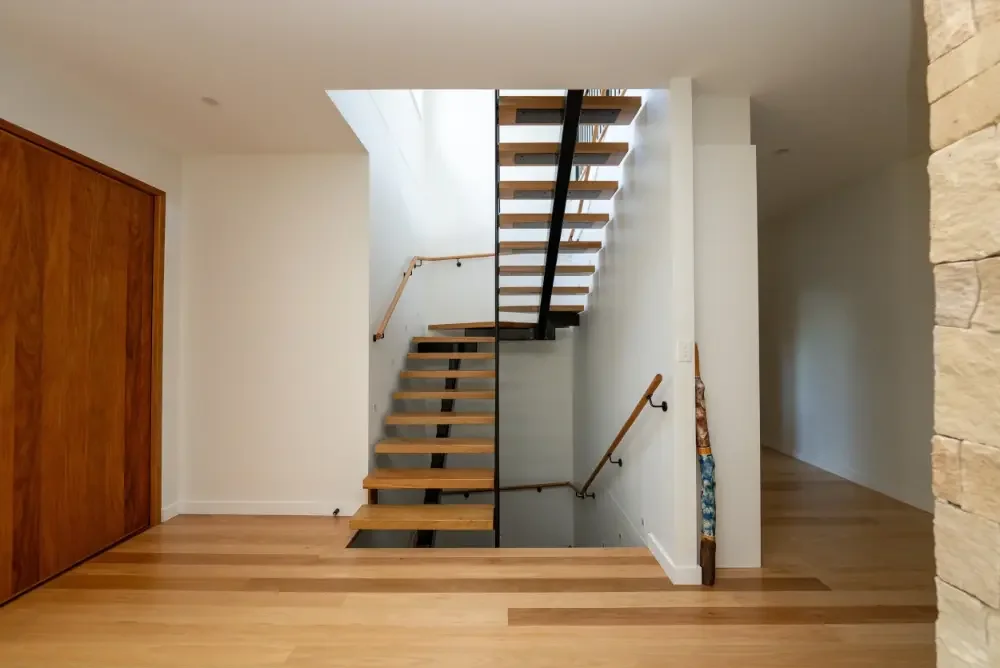
Split-level designs are the most widely used approach for sloping blocks in Australia. Rather than levelling the site entirely, the floor plan steps with the slope, with short stairways connecting each level. This approach reduces earthworks, creates naturally higher ceilings in lower-set areas, and allows zones of the home to be separated for privacy. At Dependabuild, our team has experience delivering home extensions and renovations on sloped Northern Beaches sites that make the most of this approach.
Split-level designs work well for moderate slopes and can accommodate a range of family configurations. Living areas, kitchens, and dining rooms typically sit on the main entry level, with bedrooms either above or below depending on the slope direction and view orientation.
Stepped Slab Construction for Gentler Slopes
For blocks with a modest incline, a stepped slab is a practical and cost-effective solution. Rather than cutting deeply into the site, the concrete slab itself is poured in steps to follow the contour of the land. This technique requires less excavation than a full cut-and-fill approach and generally results in better drainage, higher ceilings, and a more natural relationship between the home and its site.
The stepped slab approach is well-suited to single or double-storey homes on gently sloping blocks and is commonly used across Sydney's suburban residential areas.
Suspended Floor and Pole Construction for Steeper Sites
On steeper blocks, particularly those with a slope greater than 20 percent, suspended floor or pole construction is often required. The home is effectively raised above the slope on a frame or posts, allowing the building to sit over the land rather than cutting into it. This approach minimises earthworks, protects the natural landscape, and is well-suited to bushland or coastal settings where vegetation needs to be retained.
Steeper sites add complexity to the engineering and may require a geotechnical assessment before design can begin. However, the resulting homes are often spectacular, with elevated outlooks and strong connections to the surrounding landscape.
Making the Most of Views, Light, and Breezes
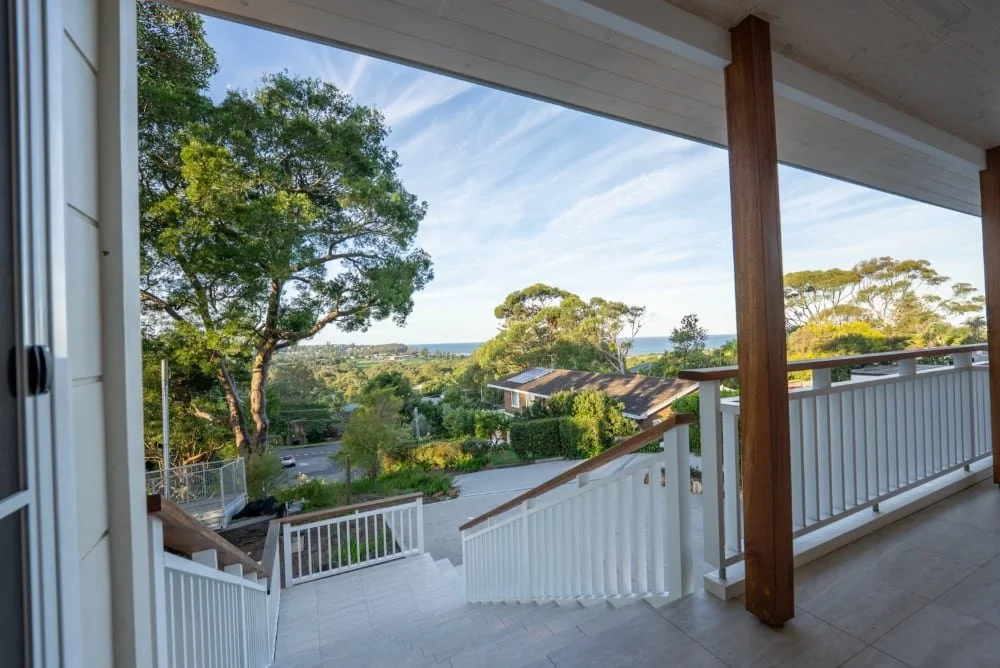
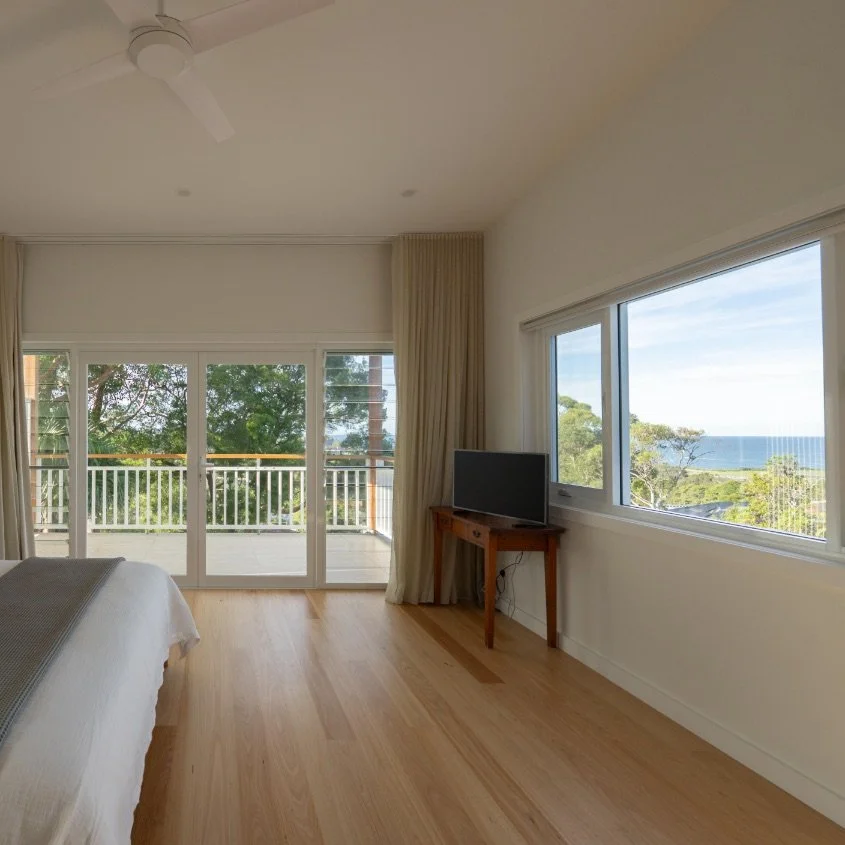
One of the real advantages of sloping block house designs in Australia is the opportunity to orient the home toward views, natural light, and prevailing breezes. On the Northern Beaches and North Shore, this often means north-facing living areas with elevated sightlines over bush or water. Good passive solar design on a sloped site can reduce heating and cooling costs significantly. Adding a quality deck at the right level of the home captures views and creates outdoor living space that genuinely enhances daily life.
Planning the orientation of the home early in the design process, before locking in floor plans, is one of the most valuable things you can do on a sloped site.
What to Expect from Planning and Approvals
Council controls and CDC requirements vary depending on your local government area. Height limits, setbacks, and site coverage rules all apply regardless of how the block slopes, so it is important to work with a builder who understands local planning requirements. Our team of Northern Beaches builders and North Shore builders can advise on the controls that apply to your block.
On very steep sites, council may also require a geotechnical engineer's report and additional structural certifications. Building these requirements into your project timeline early avoids delays once construction is underway.
FAQs
-
Generally yes. Additional costs include excavation, retaining walls, engineering, and more complex formwork. However, a design that works with the slope can minimise these costs significantly.
-
A split-level home steps the floor plan with the natural slope of the block, connecting levels with short internal staircases. It reduces earthworks and often creates better ceiling heights and separation between zones.
-
Yes, using stepped slab construction. This technique follows the land's contour with a stepped concrete slab rather than levelling the entire site, making it suitable for moderate slopes.
-
Standard council controls apply, plus potential requirements for geotechnical reports on steep sites. Height limits and setbacks still apply and need to be checked against your specific block.
-
Better views, improved natural ventilation, natural separation between zones, and often a more architecturally interesting result than a flat-block equivalent. Sloped sites can also require less earthworks when designed well.
